Industry leaders highlight execution, governance and trusted data as critical to turning AI ambition into measurable business value across Nigeria’s financial services sector
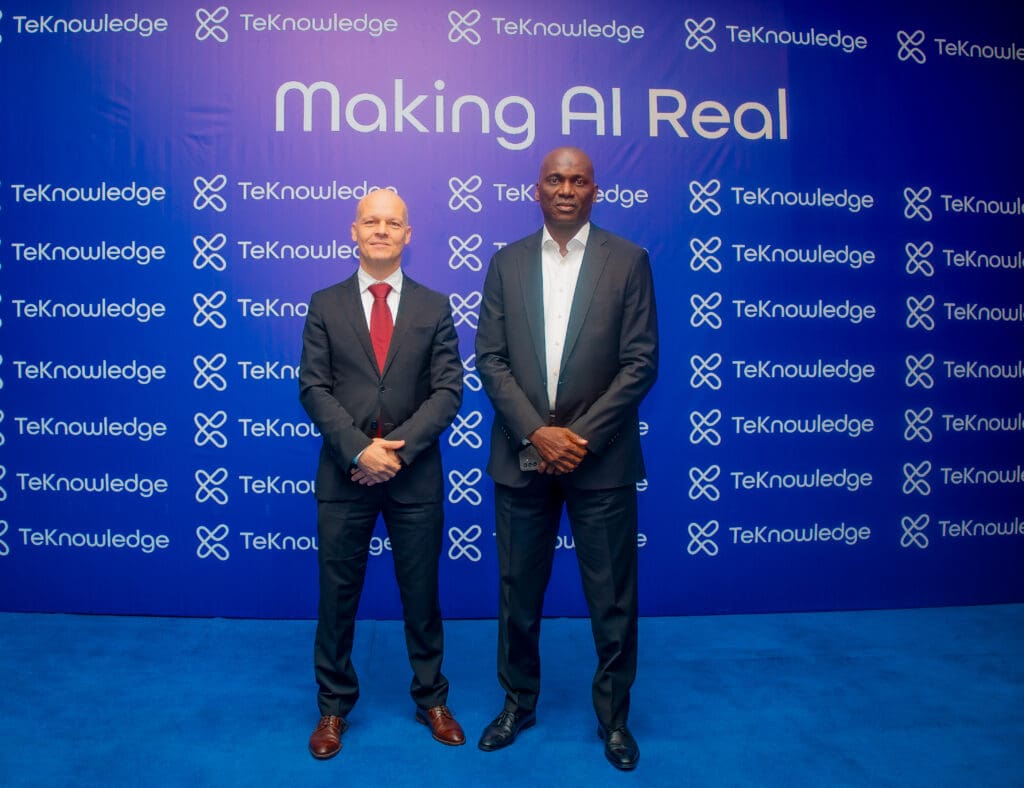
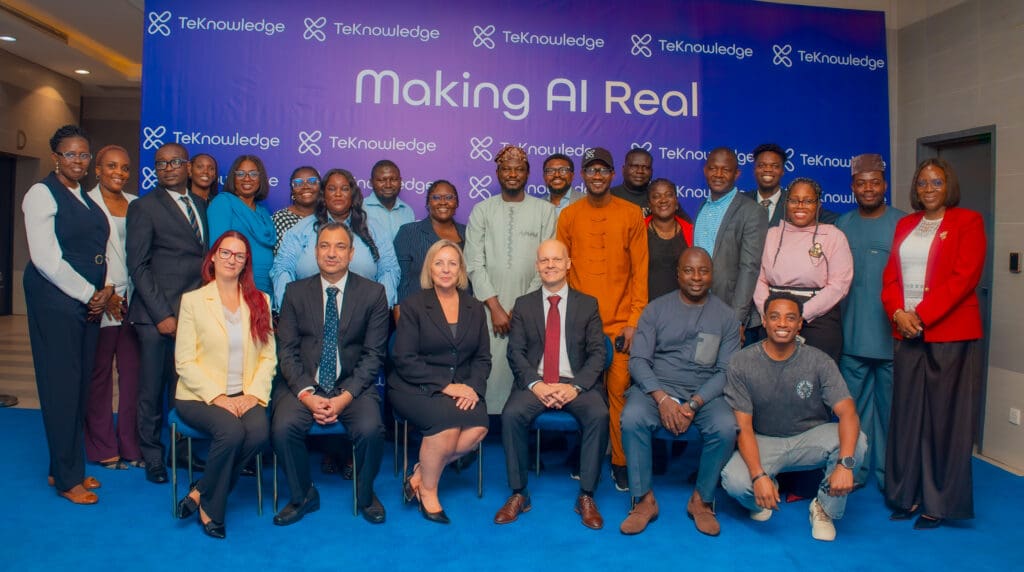
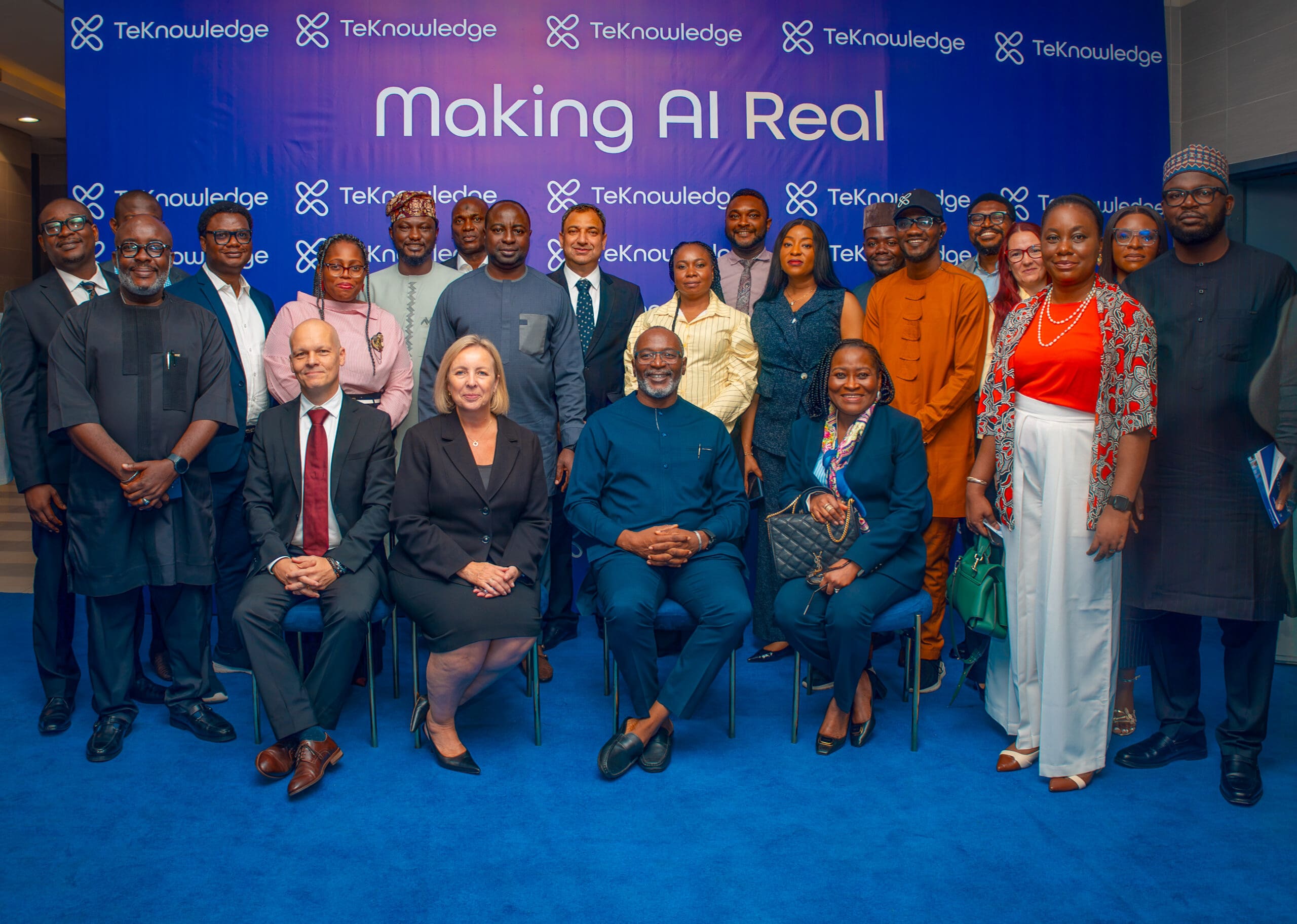
As AI gains momentum across Nigeria’s financial services industry, executives are increasingly recognising that the greatest challenge facing banks is no longer technology adoption, but trusted execution. At a recent Executive Leadership Forum on AI Readiness for Banking and Financial Services Institutions, organised by TeKnowledge in Lagos, industry leaders discussed the critical role of governance, trusted data and executive leadership in turning AI ambition into measurable business outcomes.
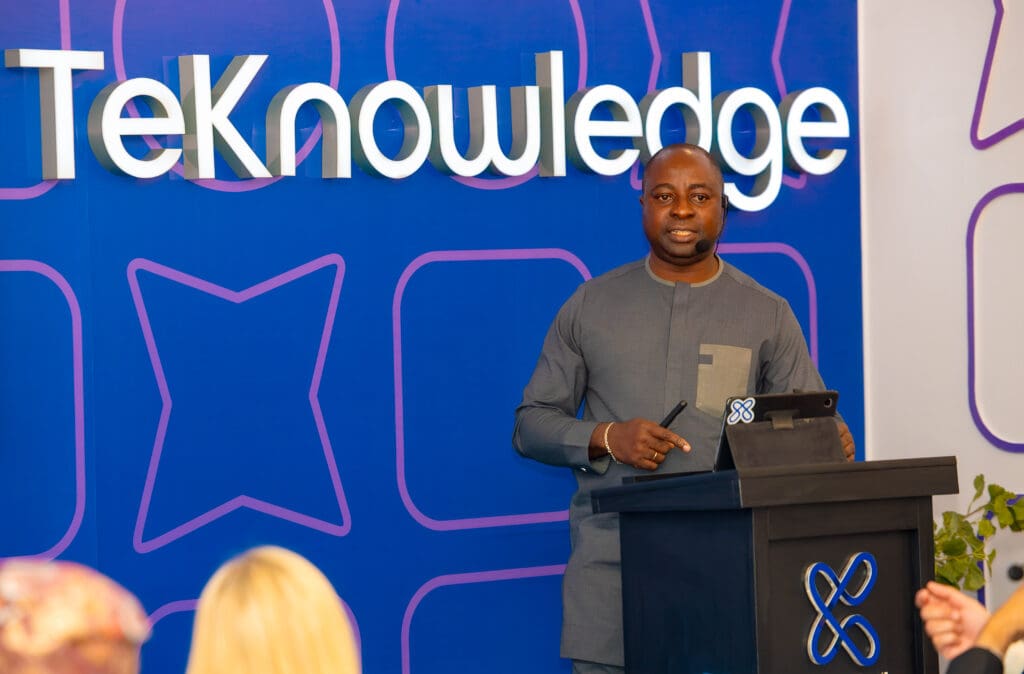
Olugbolahan Olusanya, TeKnowledge Territory Director, Africa
AI, Trust and the New Banking Imperative
Opening the Event, TeKnowledge Territory Director for Africa, Olugbolahan Olusanya emphasized that the real opportunity for financial institutions is not simply adopting AI, but building the capability to scale it securely, responsibly and with measurable value. His presentation highlighted the importance of bringing innovation, trust, cyber resilience and customer outcomes together as part of the AI journey.
“Innovation and trust are not competing objectives. Trust is what allows innovation to scale. The winners will be those who turn AI ambition into trusted, scalable and measurable outcomes”.
Start with the outcome, not the technology. AI should transform how the business works, while protecting the trust on which the financial system depends.
Aileen Allkins, President and CEO, TeKnowledge
AI Requires Executive Ownership
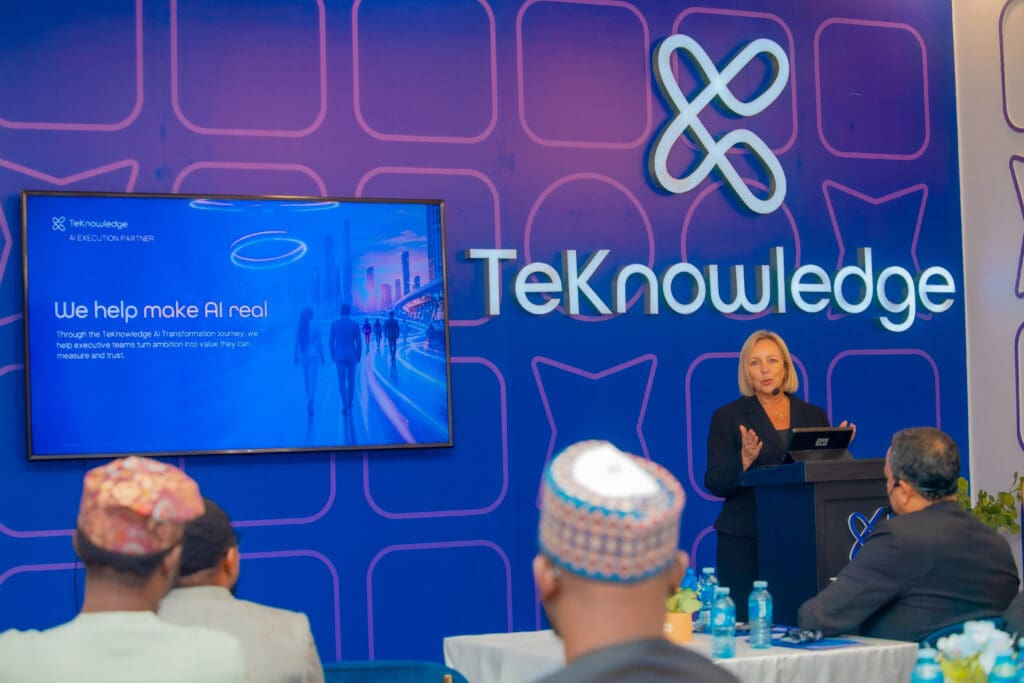
A central theme of the discussion was that AI is no longer primarily a technology challenge, but an execution challenge. TeKnowledge President and CEO Aileen Allkins highlighted that while technology teams play an important role in deploying AI solutions, responsibility for outcomes ultimately sits with executive leadership. She noted that governance, customer trust, risk management, workforce transformation and regulatory compliance demand direct board and C-suite oversight. As AI becomes embedded across critical banking functions, leaders who connect strategy, trusted data, governance and execution will be best placed to convert AI investments into measurable business value.

Eric Schifflers, Group Chief Information and Security Officer, TeKnowledge
Trust Emerging as a Strategic Asset
Eric Schifflers, TeKnowledge Group Chief Information and Security Officer and Head of Governance, Risk and Compliance (GRC), emphasised that trust is becoming a critical differentiator as AI adoption accelerates across the financial services sector. He noted that institutions face growing threats from AI-enabled fraud, synthetic identities, deepfakes, misinformation and increasingly sophisticated cyberattacks, driving a greater focus on governance, compliance, and security by design.
According to Eric, customer trust may become one of the most valuable competitive advantages in the AI era, particularly in a sector where confidence and security underpin long-term sustainable growth.
LK Sharma, Group Chief Data Officer, Teknowledge
Data Will Determine Success or Failure
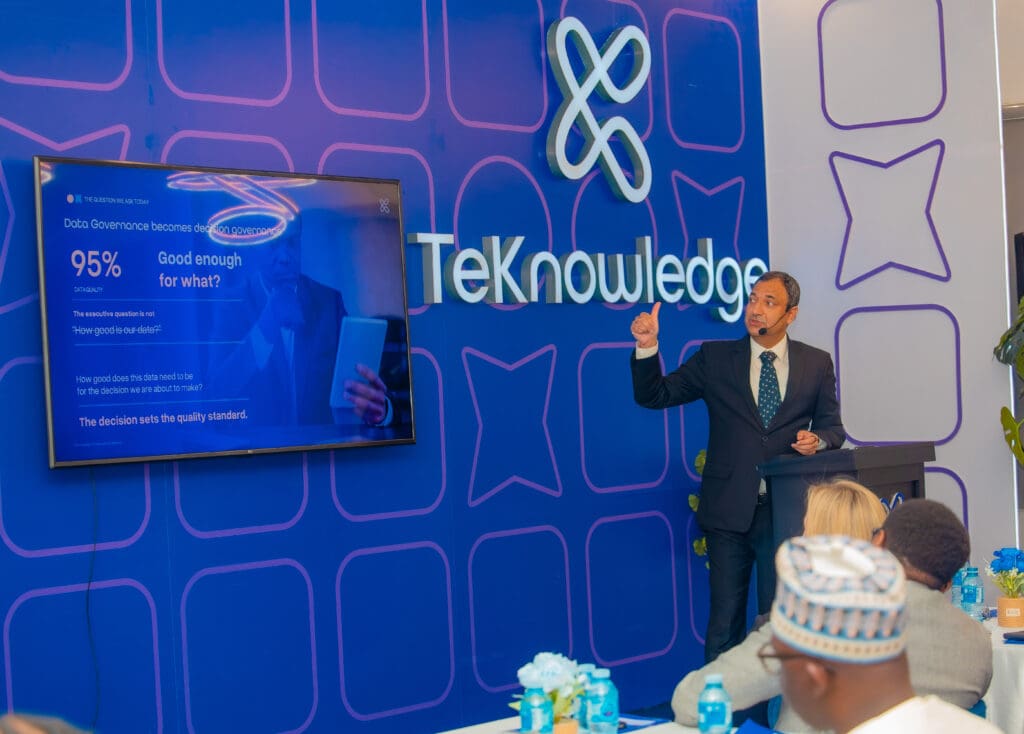
Another key theme emerging from the Executive Leadership Forum was the importance of data quality in successful AI adoption. TeKnowledge Chief Data Officer LK Sharma highlighted that while much of the conversation around AI focuses on models and technology, the quality and reliability of the data behind them are equally important.
As banks and financial services institutions increasingly rely on data-driven systems for lending decisions, fraud detection, customer engagement and regulatory compliance, confidence in the underlying data becomes essential. He highlighted that the key question for financial institutions is not simply whether their data is good or bad, but whether it is reliable enough for the decisions being made. Not all data needs to meet the same standard; the level of quality required depends on the consequence of the decision.
He also highlighted that governance, traceability and accountability will become increasingly important as organisations scale AI and need to explain and stand behind the decisions it supports.
Wole Abu, Managing Director, Equinix West Africa
Data and AI Sovereignty
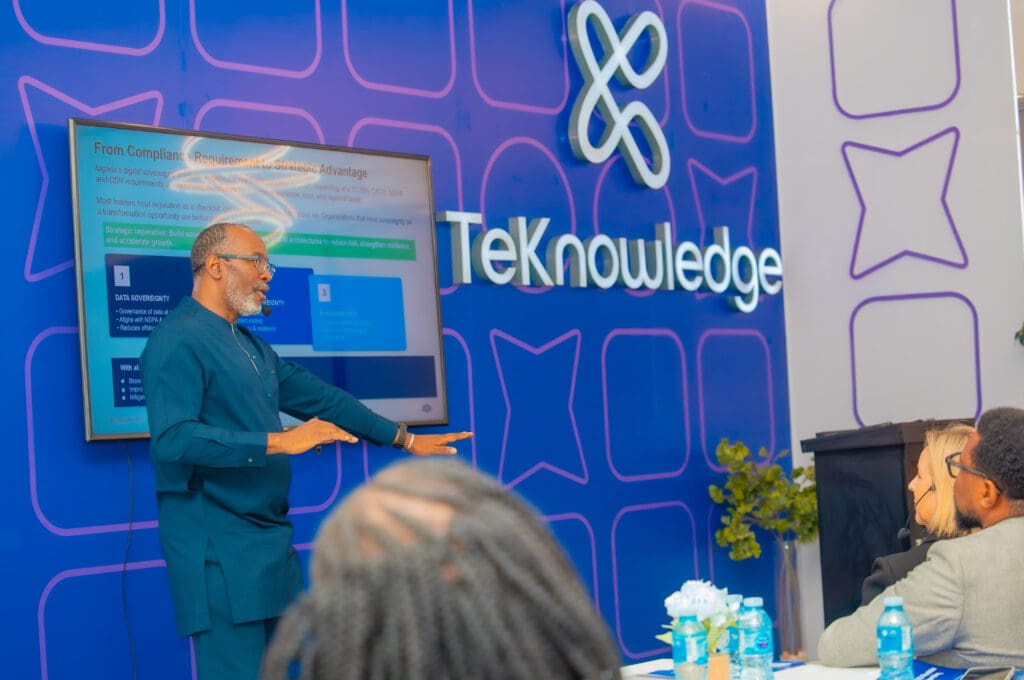
The discussion also explored the growing strategic importance of data and AI sovereignty for organisations operating in an increasingly regulated and AI-driven environment. Wole Abu, Managing Director, Equinix West Africa, noted that for Nigerian enterprises, the conversation has shifted from obligation to opportunity. Rather than viewing NDPA and CBN requirements solely as regulatory hurdles, organisations are increasingly recognising them as foundations for enterprise resilience, trust and regional scale. He noted that this opportunity is reflected in the growth of the sovereignty market, which is projected to reach $31.58 billion by 2031, growing at a CAGR of 17.72%.
He argued that many organisations still approach compliance as a checklist exercise, overlooking the broader strategic value of sovereignty. While data sovereignty provides the foundation through the governance and control of data, AI sovereignty extends that responsibility to datasets, models and compute infrastructure. He noted that organisations that train and run models on infrastructure they do not control risk not only regulatory exposure, but also losing control of the intellectual property and institutional knowledge that increasingly drive competitive advantage.
He added that when data and AI sovereignty are designed together rather than addressed in isolation, organisations gain greater flexibility in where they store and process data, while strengthening disaster recovery, cybersecurity and supply-chain resilience.
Aileen Allkins, President and CEO, TeKnowledge
From Pilots to Production
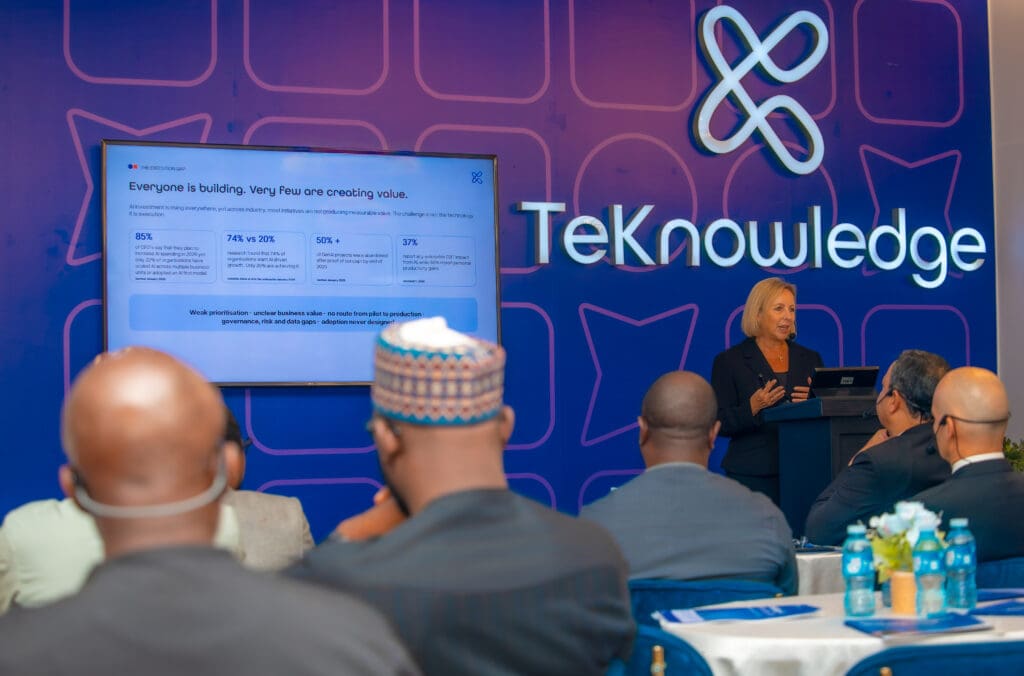
Bringing the discussion together, TeKnowledge President and CEO Aileen Allkins highlighted one of the most common challenges organisations face in their AI journey: moving initiatives beyond the proof-of-concept stage. She noted that unclear business priorities, limited executive ownership, weak governance, poor data readiness and difficulties in measuring value creation often prevent organisations from scaling AI successfully.
She emphasised that successful institutions begin with clearly defined business outcomes before selecting technology solutions. She outlined a disciplined approach that includes identifying opportunities, prioritising high-value use cases, establishing appropriate governance controls, deploying with measurable objectives and continuously monitoring performance. According to Allkins, this execution-focused model is becoming essential for organisations seeking to generate sustainable value from AI investments.

The Opportunity Ahead
For Nigeria’s banking sector, the opportunity remains significant.
Throughout the Executive Leadership Forum, one message remained consistent: AI has the potential to improve productivity, strengthen fraud prevention, enhance customer experiences and expand access to financial services. However, industry leaders agreed that success will depend not on the number of pilots launched, but on the ability to scale AI responsibly through strong governance, trusted data and executive accountability.
As competition intensifies and regulatory scrutiny increases, the race to adopt AI may ultimately become a race to build the foundations required to make AI work at scale. For organisations across Nigeria’s financial services sector, the focus is increasingly shifting from experimentation to execution, and from AI ambition to measurable business value.